


Is Your Large Diameter Aluminum Round Bar A Hidden Liability?
Dec 25, 2025
You purchase a large diameter aluminum bar for a critical, expensive machined part. After hours of machining, you discover internal porosity in the core. The entire part is now scrap, wasting valuable machine time, labor, and material costs.
A commodity large bar is a risk; its core is a liability. A forged bar is a guarantee. We deliver a fully consolidated, internally sound foundation, ensuring the value of your machining and the integrity of your final component.
I'll never forget a call from a machining client in a panic. They had a huge contract to supply a set of complex, large-diameter hydraulic manifolds. They bought 400mm diameter 6061 bars from a commodity supplier to save on material costs. They machined the first piece, a process that took over 20 hours. On the final pass, a pocket of porosity opened up deep inside the bar. The part failed the pressure test. They discovered the entire batch of cheap, cast bars had the same internal voids. Their "cost savings" had just put a million-dollar contract at risk. We immediately shipped them our forged 6061 bars. The forging process guarantees a dense, non-porous internal structure. They machined our material without a single failure and saved their contract. They learned that the initial price of the bar is nothing compared to the cost of failure.
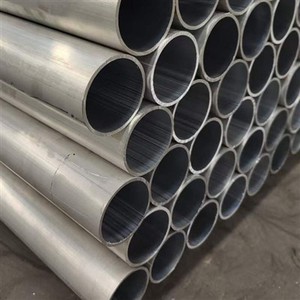
Are all large diameter round bars created equal?
You need a large diameter bar, but you're worried about quality. Standard suppliers have limited stock, and you fear that the bigger the bar, the higher the chance of hidden defects inside.
Sizes can go up to over 1000mm, but the manufacturing method is what matters. For diameters over 200mm, a forged bar offers superior internal soundness compared to extruded or cast bars, which risk porosity and cracks.
When dealing with large diameter bars, the manufacturing process is everything. You generally have three choices, and they are not equal in quality. Extrusion is great for producing smaller diameter bars with good dimensional accuracy, but it has practical limits on size. Casting can produce very large diameters, but it's a risky choice for a machinist. As the molten metal cools in a large mold, it's very difficult to prevent internal defects like porosity (gas bubbles), shrinkage, and cracks, especially in the core of the bar. Machining a cast bar is a gamble. Forging is the only process that guarantees a solid, internally sound bar at large diameters. We start with a cast ingot but then use immense pressure to shape it. This forging process physically closes any internal voids and refines the grain structure, creating a dense and uniform material from the surface to the very center.
Round Bar Manufacturing Method Comparison
|
Method |
Max Diameter |
Internal Integrity |
Best For |
|
Extrusion |
Limited (~200-300mm) |
Good |
Small to medium diameter, standard profiles |
|
Casting |
Very Large |
Poor (High risk of porosity, shrinkage) |
Non-critical applications, low-stress parts |
|
Forging |
Very Large (Custom) |
Excellent (Guaranteed sound, no voids) |
Critical, high-stress, machined parts |
Should you choose 6061 or 7075 for maximum strength?
You need a high-strength part, but the high cost of 7075 makes you hesitate. Choosing the wrong alloy means you either spend too much or risk the part failing under load.
7075-T6 is the stronger choice, with nearly double the yield strength of 6061-T6. It's for ultimate performance. However, 6061-T6 offers great all-around strength, better corrosion resistance, and a lower cost for general use.
This is a classic engineering trade-off between peak performance and versatile reliability. 7075-T6 is an aerospace-grade alloy, alloyed primarily with zinc. It can be heat-treated to achieve incredible strength, making it the top choice when the highest possible strength-to-weight ratio is the main goal. This is why it's used in aircraft structures and high-performance racing components. However, this strength comes with trade-offs: it is more expensive, harder to machine, and less resistant to corrosion. 6061-T6, on the other hand, is the industry's workhorse. It's a magnesium-silicon alloy that offers fantastic strength for a huge range of applications. It's strong, weldable, corrosion-resistant, and more affordable. For most industrial machinery, structural components, and automotive parts, 6061-T6 provides the perfect balance of performance and value. The choice is simple: if you need the absolute maximum strength, choose 7075. For almost everything else, 6061 is the smart, reliable choice.
Is 5052 a stronger choice than 6061?
You hear the term "marine-grade" for 5052 aluminum and assume this means it is a superior, high-strength alloy for tough jobs. This can lead you to specify it for a structural part where it will fail.
No, 6061-T6 aluminum is significantly stronger than 5052. 5052 is a non-heat-treatable alloy valued for its amazing corrosion resistance and formability, not for its structural strength.
This question highlights a very common point of confusion. The difference between these two alloys is fundamental. 6061 is a heat-treatable alloy. Its strength comes from a carefully controlled heating and quenching process (the T6 temper) that changes its internal grain structure. This makes it hard and strong, perfect for machining structural parts from a solid bar. 5052 is a non-heat-treatable alloy. It gets its strength from being work-hardened, for example, by being rolled into a sheet. Its primary alloying element, magnesium, gives it excellent resistance to saltwater corrosion, which is why it's called "marine-grade." It is also very formable, meaning it can be bent and shaped without cracking. You use 5052 sheet to build a boat hull or a fuel tank. You would almost never machine a structural, load-bearing part from a 5052 bar. For that, you need the superior strength of a heat-treated alloy like 6061.
Is the price of your aluminum bar reflecting true value or hidden risk?
You find a low price for a large diameter aluminum bar and think you've secured a good deal. But a price that seems too good to be true often hides the risk of poor quality.
The price of a bar depends on its alloy, diameter, and manufacturing method. A cheap, large-diameter cast bar is a gamble. Our premium forged bars cost more upfront but eliminate scrap, saving you far more in the long run.
For a trader or machining company, the "price" of a raw material is not the purchase price; it's the total cost to produce a finished, quality-approved part. A low-cost cast or extruded bar carries a huge hidden risk.
Alloy and Diameter: 7075 will always be more expensive than 6061. And as the diameter increases, the cost per kilogram also increases because it's more difficult to manufacture.
Manufacturing Method: This is the most critical factor for large bars. A cast bar is cheapest to produce, but carries the highest risk of internal defects. A forged bar has a higher initial purchase price because the process is more complex and energy-intensive.
However, that higher initial price for a forged bar is an insurance policy. It guarantees that the bar is 100% sound. You can invest hours of expensive CNC machine time with confidence, knowing you won't discover a void on the last pass. The true value of a SWA Forging bar is the elimination of risk and the guarantee of zero scrap.
Conclusion
Don't gamble with your raw material. Secure your production and reputation by choosing SWA Forging's large-diameter forged bars-the only choice for a guaranteed, internally sound foundation.


